What you need to know before starting or growing your box truck business
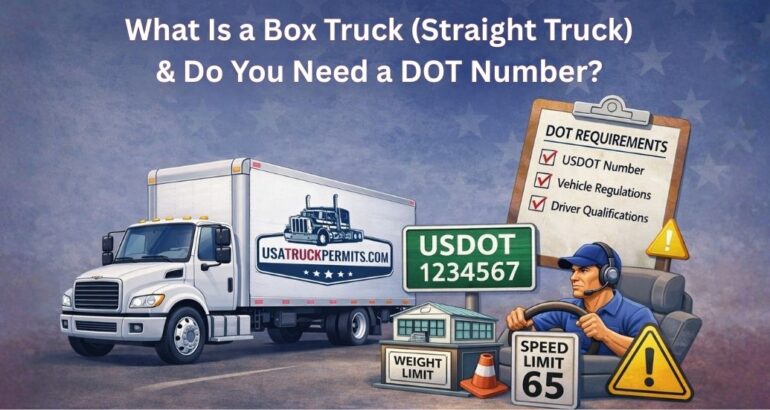
If you’re trying to start a box truck business or expand your current operation, you’re probably wondering: What exactly is a box truck? And do I need a DOT number to operate one?
Because DOT requirements depend on weight, business use, and interstate vs. intrastate operations, understanding the rules early can help you avoid costly fines and delays. Many new carriers choose to work with professionals like USA Truck Permits to handle registrations and stay compliant from day one.
1. What Is a Box Truck (Straight Truck)?
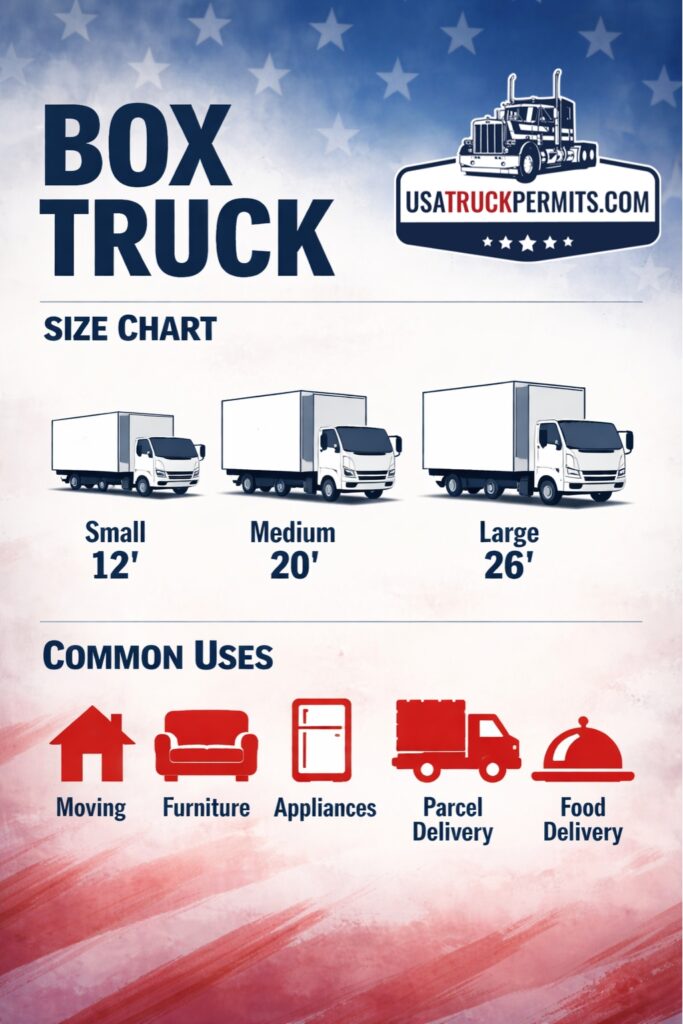
A box truck, also called a straight truck, is a commercial vehicle where the cab and cargo box sit on the same frame, unlike a semi-truck that has a separate tractor and trailer.
Common examples of box trucks include:
- Moving trucks
- Delivery trucks
- Appliance/furniture delivery vehicles
- Parcel and last-mile delivery trucks
- Hotshot and local freight trucks
- Non-CDL commercial trucks
Box trucks range from 12 ft to 26 ft and are extremely popular for new owner-operators, delivery companies, and small freight carriers.
A box truck is a commercial vehicle, and depending on how you operate, you may need a USDOT number, MC authority, and other permits.
2. Do Box Trucks Need a DOT Number?
This is one of the most common questions from new drivers and first-time box truck owners.
Short answer:
Most box trucks DO need a DOT number but not all.
You MUST get a USDOT number if your box truck:
- Has a GVWR of 10,001 lbs or more
- Is used for commercial or business purposes
- Operates interstate (crosses state lines)
- Transports hazardous materials
- Requires enrollment in an FMCSA safety program
This includes many non-CDL box trucks, and to avoid mistakes during registration, many businesses rely on professional USDOT number registration services to ensure everything is filed correctly.
Intrastate Box Truck DOT Requirements
Even if you stay within one state, you may still need a DOT number, especially in states like Texas, Florida, and Georgia. It’s important to review local rules, and you can check detailed requirements for Florida trucking permits or Georgia trucking permits before starting operations.
Common states with intrastate DOT number requirements include:
- Texas (TXDOT / TXDMV)
- Florida
- Georgia
- California
- Pennsylvania
- New York
If you plan to expand or work with brokers/shippers, having a DOT number is both required and professional.
3. DOT Number vs. MC Number: What’s the Difference?
A USDOT number is used to track safety, inspections, and compliance, while an MC number is required if you operate for hire and cross state lines with regulated freight.
Most freight-hauling box truck businesses need both, and if you’re new to the process, following a proper MC number application process can help you avoid delays and rejections.
4. How To Get a DOT Number for Your Box Truck
To obtain your DOT number, you must register through the FMCSA. Steps include:
- Choose whether you will operate interstate or intrastate
- Form your business (LLC, Corporation, DBA)
- Apply for your USDOT number
- Complete your MCS-150 form
- Set up your FMCSA safety profile
- Complete any additional filings (UCR, BOC-3, insurance, MC authority)
Many new carriers run into delays because they miss steps or submit incorrect information.
USA Truck Permits helps simplify the entire process.
5. Box Truck DOT Compliance
Getting a DOT number is only the beginning.
You must stay compliant to avoid shutdowns, fines, and insurance issues.
A. Driver Qualification Requirements
- Valid CDL (if required by weight or cargo)
- Medical card
- Pre-employment checks
- Complete Driver Qualification File (DQF)
B. Vehicle & Safety Requirements
- Annual DOT inspection
- Daily pre-trip/post-trip inspections
- Maintenance logs
- Safety equipment inside the truck
C. Operation & Recordkeeping Requirements
- Hours of Service rules
- ELD compliance (if applicable)
- Drug & alcohol testing enrollment
- Updated MCS-150
- Insurance filings
DOT enforcement for box trucks is strict, even for non-CDL drivers.
6. Do You Need a CDL to Drive a Box Truck?
Not always.
Most box trucks under 26,000 lbs GVWR do not require a CDL.
However, CDL requirements depend on:
- Vehicle weight
- Combined weight (truck + trailer)
- Hazmat cargo
- State-specific rules
Important:
A non-CDL box truck still requires DOT compliance if operated commercially.
7. Permits & Registrations Needed to Start a Box Truck Business
Starting a box truck business requires more than just a DOT number.
You may also need:
- MC Authority (for interstate, for-hire carriers)
- UCR Registration
- BOC-3 Filing
- IFTA Account & Decals (if required)
- IRP Apportioned Plates (if weight or travel applies)
- HVUT / Form 2290
- State intrastate permits
- Commercial trucking insurance
If you’re unsure where to begin, following a complete trucking authority setup guide can help you understand the full process step by step.
8. Need Help Getting Your DOT Number or Box Truck Authority?
Starting a box truck business the right way is critical and the process is often more confusing than new carriers expect.
At USA Truck Permits, we specialize in:
- USDOT number registration
- MC authority application
- BOC-3 filing
- UCR registration
- IFTA setup & fuel tax filings
- FMCSA compliance
- Safety audit preparation
- Ongoing permit management
Whether you’re starting your first box truck or building a fleet, we help you stay legal, compliant, and profitable.
Start Your Box Truck Business With Confidence
Contact USA Truck Permits today to get your DOT number, MC authority, and all required permits in a fast, accurate, and stress-free way.